Best Smart Rings in the UK: An Honest Comparison Guide
Compare smart rings in the UK by fit, sleep and recovery features, subscriptions, battery, water resistance, privacy, returns and total cost.
The best smart ring is not the one with the longest feature list. It is the one you can wear consistently, whose app works with your phone, whose ongoing cost is clear, and whose measurements answer a question you actually have.
For UK buyers, compare fit, intended use, subscription, battery and charging, water-resistance wording, data handling, support and returns before comparing scores. A ring that is uncomfortable at night or hides useful data behind an unexpected membership is poor value even when its sensor list looks impressive.
Start with your main reason for wearing one
| Main need | Features worth checking | Important limitation |
|---|---|---|
| Sleep routine | Overnight comfort, sleep windows, trends and battery timing | Consumer sleep stages are estimates, not a diagnosis |
| Training recovery | Resting heart rate, HRV trends, temperature trends and activity context | A readiness score should not overrule pain, illness or professional advice |
| Less screen time | Clear summaries and unobtrusive wear | Most rings lack a display, so the app still matters |
| Subscription-free ownership | What remains available without a monthly fee | “No subscription” may apply only to core features |
| Small wearable | Sizing kit, thickness, weight and swelling allowance | Finger fit changes with heat, exercise and time of day |
For a broader device framework, read how to choose wearable health devices. Buyers comparing an adjacent product can use the Oura Ring alternative guide without assuming either product is a universal winner.
1. Fit is the first technical specification
Sensors need consistent contact, but a ring must not be painfully tight. Fingers can swell overnight, during exercise, in warm weather and during travel. Brand sizes may not match ordinary jewellery sizes, so guessing from an existing ring is risky.
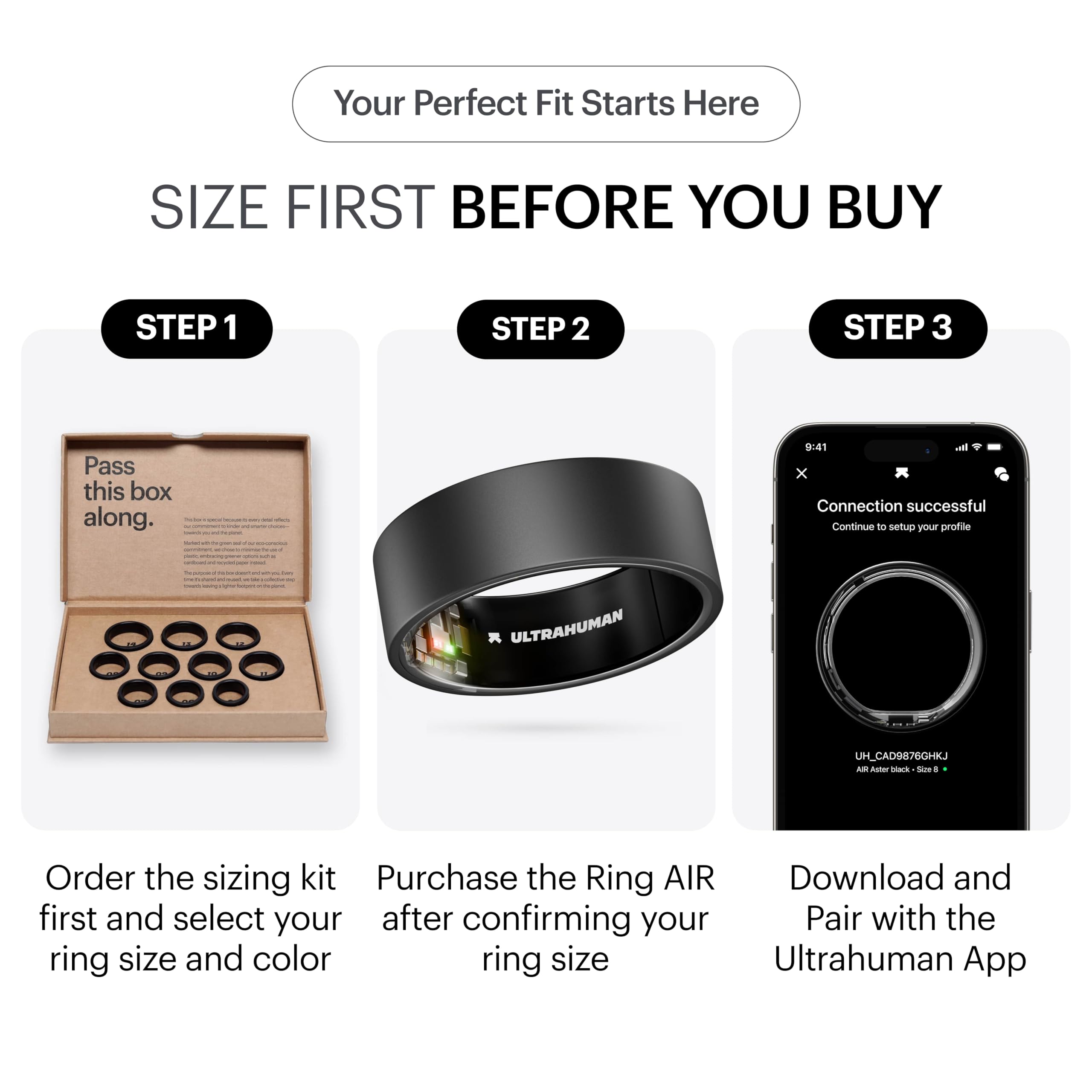
Use the exact maker’s sizing kit when available. Wear the sample for a full day and night, try the fingers permitted by the instructions, wash your hands, work and sleep normally, and check that the ring neither rotates freely nor becomes difficult to remove. The UK sizing guide gives a fuller process.
2. Compare measurements by purpose, not by sensor count
Many smart rings combine optical pulse sensing, temperature trends and movement data to estimate sleep, recovery and activity. The useful question is what the app presents consistently and how clearly it explains missing or uncertain data.
Do not treat a consumer ring as a medical diagnostic device unless the exact function and jurisdiction are explicitly supported by the maker. Persistent symptoms, fertility questions and cardiac concerns belong with qualified healthcare, not a recovery score.
When comparing products, ask:
- Which trends are shown: resting heart rate, HRV, temperature, sleep timing or activity?
- Are raw or historical data exports available?
- Does the app explain gaps caused by loose fit, charging or movement?
- Which phone operating systems and minimum versions are supported?
- What data remains available if a subscription ends?
3. Calculate total cost, including membership
The shelf price is only the first line. Add required subscription fees over the period you expect to keep the ring, replacement chargers, sizing logistics and any return postage. A cheaper ring with a mandatory membership can cost more over two years than a higher-priced subscription-free model.
The Ultrahuman Ring Air sold on this site is positioned with lifetime access to its core app rather than a monthly membership. Check the current wording, live basket total and included accessories on the product page before buying. This page does not claim that one listed product represents the entire UK market.
4. Battery life must fit your routine
Published battery life is normally an “up to” figure. Real use varies with features, battery age, temperature and signal conditions. Look beyond the maximum number:
- How long does a full charge take?
- Is the charger proprietary, and can a replacement be bought?
- Can you charge during a shower or desk session without losing the night?
- Does the app warn early enough to protect an overnight record?
- How is battery service handled after the warranty period?
A ring with fewer claimed days but a convenient charging habit may collect more complete data.
5. Read water-resistance wording precisely
An ATM or depth rating describes a test condition; it is not a promise for every hot shower, chemical exposure, impact or high-speed water activity. Follow the exact maker’s permitted activities and care instructions. Check whether damage from wear, soap, sauna use or swimming is covered by warranty rather than assuming all water exposure is equal.
6. Review privacy and account dependence
A smart ring is tied to an app and account. Before buying, find the privacy notice and answer practical questions:
- What health and activity data is collected?
- Can you export or delete it?
- Does the ring work when the service is offline?
- Can the account be transferred when a phone changes?
- Are optional integrations clearly controlled?
Avoid treating a vague “AI insights” label as evidence of better measurement. The quality of explanations, controls and long-term support matters more than the phrase.
7. Compare returns and warranty before removing packaging
Sizing errors and skin comfort are common reasons a ring may not fit. Read the live return conditions before wearing the final ring beyond the permitted trial. Keep the sizing-kit confirmation, order record, charger and packaging until you know the fit is sustainable.
UK consumer rights exist alongside the seller’s stated policy, but this guide is not legal advice. Save the exact warranty and returns wording visible when you order.
A fair comparison worksheet
| Question | Ring A | Ring B | Ring C |
|---|---|---|---|
| Exact size confirmed with maker kit? | |||
| Comfortable for a full night? | |||
| Core purpose supported? | |||
| Mandatory monthly fee? | |||
| Two-year ownership cost? | |||
| Typical charging routine? | |||
| Phone compatibility confirmed? | |||
| Data export/deletion explained? | |||
| Return and warranty terms saved? |
This structure avoids invented winner scores. If a fact is not published for a product, mark it unknown instead of assuming parity.
Frequently asked questions
Which smart ring is best in the UK?
There is no defensible universal winner. Shortlist by fit, primary use, app compatibility, ongoing cost, charging routine and support, then verify each claim on the current product page.
Do all smart rings require a subscription?
No. Some include core app access, while others require or offer memberships. Check which features remain available without payment rather than relying on a headline alone.
Can a smart ring diagnose a health condition?
Consumer sleep and recovery rings should not be used as a substitute for medical diagnosis. Use trends as personal context and seek qualified advice for symptoms or clinical questions.
How should I choose a size?
Use the exact maker’s kit and wear it through a normal day and night. Account for swelling and check the removal method before confirming the final size.
Bottom line
A good smart-ring comparison is a decision record, not a league table assembled from marketing claims. Get the fit right, choose the measurements you will use, make ongoing cost explicit, and test whether charging and app support fit daily life. Subscription status matters, but it is one column in the comparison, not the definition of the whole category.